


Trump Sets 10–15 Day Deadline for Iran Nuclear Deal, Warns of “Really Bad Things”
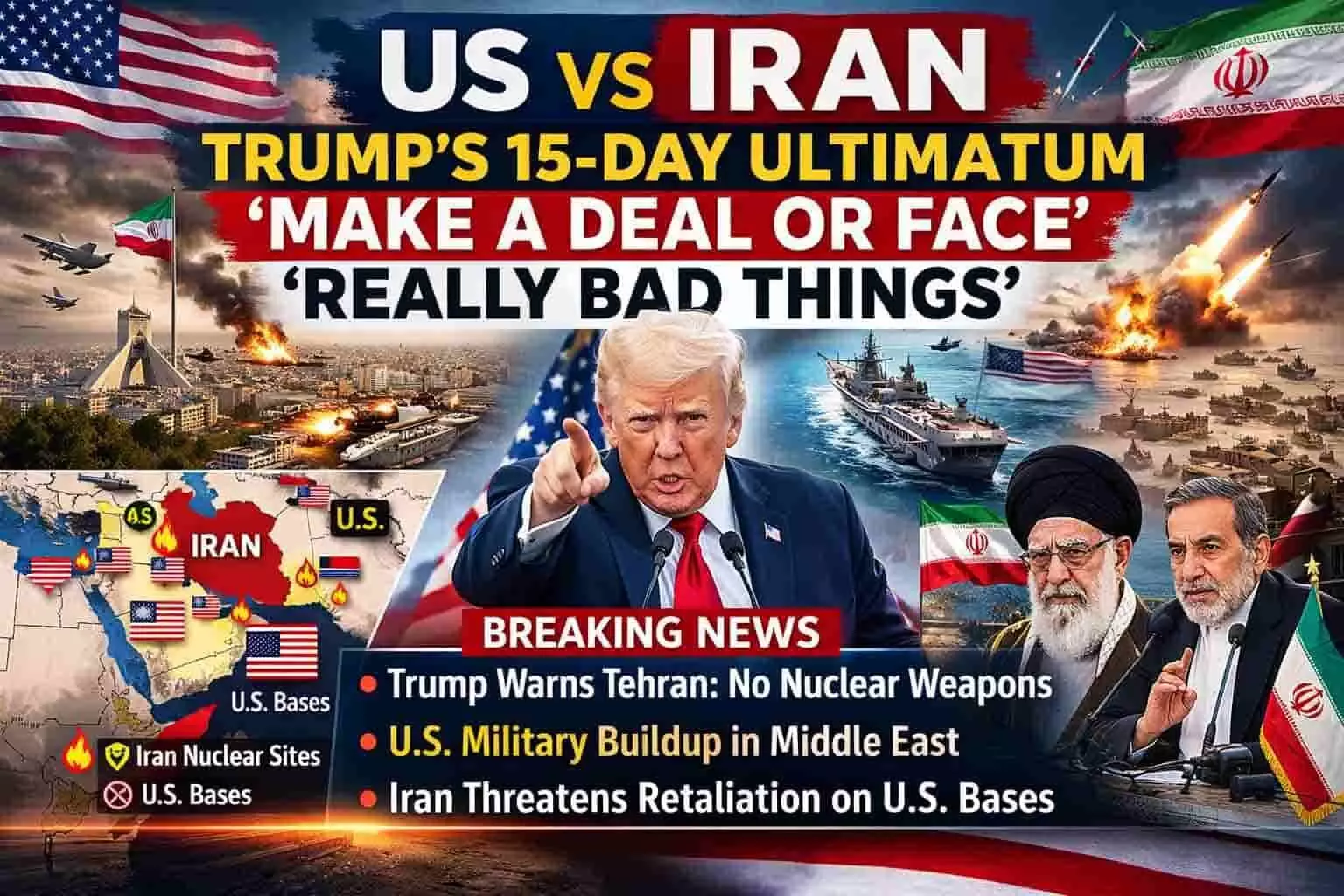


Summery
- Trump gives Iran 10–15 days to agree to a nuclear deal.
- Tehran warns U.S. bases would be “legitimate targets” if attacked.
- Massive U.S. military build-up underway in the Middle East.
- Oil prices climb amid fears of wider regional conflict.
Washington: U.S. President Donald Trump has issued a stark warning to Iran, setting a 10 to 15 day window for Tehran to agree to what he described as a “meaningful” nuclear deal or face severe consequences. The remarks, delivered during a meeting in Washington and later reiterated to reporters aboard Air Force One, have intensified already rising tensions between the two countries.
Deadline Diplomacy
Trump said negotiations were ongoing but warned that without an agreement, “really bad things” could happen within the next two weeks.
Trump’s Warning and the 10–15 Day Timeline
Speaking publicly, Trump suggested that talks with Iranian negotiators were progressing but insisted that Tehran must commit to terms that address U.S. concerns over its nuclear activities. He emphasized that Iran “cannot have a nuclear weapon,” framing the issue as central to peace in the Middle East.
While declining to provide operational details, Trump referenced U.S. airstrikes carried out last June, claiming that Iran’s nuclear potential had been significantly reduced. He left open the possibility of further action, stating that developments would become clear within the next 10 to 15 days.
Iran’s Response: Warning of Retaliation
In a letter addressed to U.N. Secretary-General Antonio Guterres, Tehran stated that it would not initiate war but would respond “decisively and proportionately” if subjected to military aggression. The letter warned that U.S. bases, facilities and assets in the region would become legitimate targets in the event of conflict.
Iran’s position underscores its longstanding insistence that its nuclear program is intended for peaceful purposes. However, the United States and Israel have repeatedly expressed concerns that enrichment capabilities could be diverted toward weapons development.

Crisis at a Glance
- US demands halt to uranium enrichment.
- Iran rejects limits beyond atomic negotiations.
- Military assets deployed across the Gulf region.
- Global markets react with oil price surge.
Military Build-Up and Strategic Signaling
The diplomatic standoff unfolds against the backdrop of a significant U.S. military deployment across the Middle East. Aircraft carriers, warships and fighter jets have been repositioned in what officials describe as precautionary measures. Satellite imagery has also shown increased activity at Iranian nuclear and missile sites, as well as heightened preparations at American bases in the region.
Simultaneously, Russia has cautioned against what it termed an “unprecedented escalation of tension,” urging restraint. A Russian corvette joined planned Iranian naval drills in the Gulf of Oman, a strategic waterway through which a substantial portion of global energy supplies transit.
Negotiations and Diplomatic Channels
Iranian and U.S. negotiators met earlier this week, with Iran’s foreign minister indicating agreement on certain guiding principles. However, U.S. officials have acknowledged that significant gaps remain, particularly over uranium enrichment and Iran’s ballistic missile program.
Washington seeks a comprehensive rollback of Iran’s enrichment activities and broader regional commitments. Tehran has rejected expanding talks beyond the nuclear file, describing missile limitations and regional policy demands as red lines.
Regional and Global Implications
The escalation has already reverberated through global markets, with oil prices rising amid fears of potential disruptions to supply routes. European governments have issued advisories to their citizens in Iran, reflecting concerns over rapid deterioration in security conditions.
Observers note that the coming days could prove pivotal. Whether the deadline serves as leverage for accelerated diplomacy or signals a prelude to military confrontation remains uncertain.
Join WhatsApp Channel Follow on Google NewsWhat deadline did Trump set for Iran?
Trump indicated that Iran has 10 to 15 days to reach a meaningful nuclear agreement.
What did Iran say in response?
Iran warned that U.S. bases in the region would be legitimate targets if attacked.
Why are oil prices rising?
Markets are reacting to fears of potential military conflict affecting Middle East energy routes.
What does the U.S. want from Iran?
Washington seeks a halt to uranium enrichment and broader limits on missile and regional activities.
Is diplomacy still ongoing?
Yes, negotiators have met recently, though significant differences remain unresolved.

Aaryan Puneet Dwivedi
Aaryan Puneet Dwivedi is a senior editor and an experienced journalist who has been active in the news industry since 2013. He has extensive experience covering and editing news across multiple fields, including politics, national and international affairs, sports, technology, business, and social issues. He is a state-level accredited journalist recognized by the Madhya Pradesh government. Known for his in-depth understanding of news and current affairs, he focuses on delivering accurate, reliable, and reader-friendly information across all major news categories.