


US Shares India Map Showing PoK and Aksai Chin as Indian Territory After Trade Deal Announcement
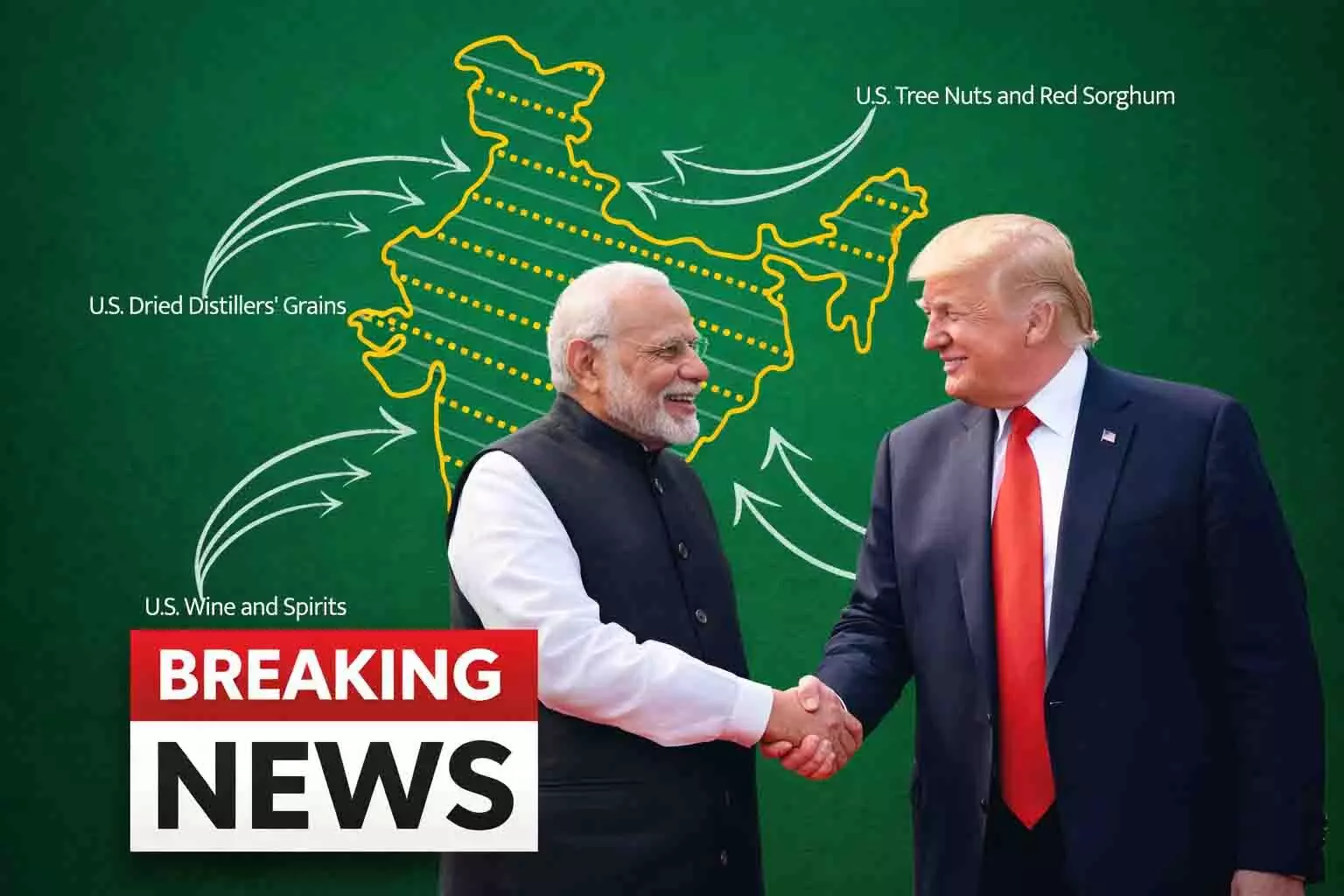


- US Trade Office map shows PoK and Aksai Chin as part of India
- Map released alongside India-US interim trade framework
- Departure from earlier US maps marking disputed boundaries
- Move sparks geopolitical debate across South Asia
A single official map shared by the United States has triggered an outsized geopolitical conversation across South Asia. Shortly after announcing an interim trade framework with India, the US Trade Representative’s Office released a visual map that depicts the entire Jammu and Kashmir region — including Pakistan-occupied Kashmir (PoK) and Aksai Chin — as an integral part of India. The image, quietly uploaded and later widely circulated on social media, went viral within hours.
🇮🇳 Read This Story in Hindi
अमेरिका ने PoK और अक्साई चिन को भारत का हिस्सा दिखाया, US मैप वायरल📌 Quick Explainer
For the first time in recent memory, a US government-linked map visually aligns with India’s official territorial claims — without dotted lines or disputed markings.
Why This US Map Is Being Seen as a Big Shift
Traditionally, Western governments and international institutions display disputed territories using dotted lines or neutral shading. Previous US-issued maps often followed this convention, particularly regarding PoK and Aksai Chin. This time, however, the map presented India’s borders in full continuity, matching India’s official cartographic position.
Whether intentional or coincidental, the timing of the map — released alongside a major India-US trade agreement framework — has added to its strategic interpretation. Analysts suggest that even if not a formal policy declaration, such visuals carry symbolic diplomatic weight.
Understanding the PoK Dispute: A Conflict Since 1947
The PoK dispute dates back to the 1947 partition of British India. Jammu and Kashmir was a princely state ruled by Maharaja Hari Singh, who chose to accede to India following an invasion by tribal militias from Pakistan’s side. This accession became the legal basis for India’s claim over the entire region.
The first India-Pakistan war ended with a UN-brokered ceasefire in 1949, dividing control along what later became the Line of Control (LoC). India has consistently maintained that PoK remains illegally occupied territory, while Pakistan refers to it as “Azad Kashmir.”
Pakistan’s Position and Recent Political Statements
Just days before the map controversy, Pakistan’s Prime Minister reiterated that Kashmir is central to Pakistan’s foreign policy. He invoked historical UN resolutions and accused India of suppressing Kashmiri voices — claims India has repeatedly rejected.
Islamabad also alleges Indian involvement in internal security issues, accusations New Delhi categorically denies. Against this backdrop, the US map has been interpreted in Pakistan as a clear diplomatic signal, even though Washington has not issued an official clarification.
Aksai Chin: The Silent but Strategic Front
Unlike PoK, the Aksai Chin dispute involves China. This high-altitude desert region in eastern Ladakh has been under Chinese control since the 1962 India-China war. China considers it vital due to a strategic highway connecting Tibet and Xinjiang.
India, however, regards Aksai Chin as an integral part of Ladakh, citing historical boundary lines and administrative records. The border remains undefined, marked by the Line of Actual Control (LAC), and continues to be a flashpoint in bilateral relations.
Trade Deal Context: Why Timing Matters
The map surfaced alongside an interim trade agreement framework between India and the US. Under the deal, tariffs on Indian goods entering the US market are set to drop significantly, while additional duties linked to Russian oil purchases have been removed.
The agreement is expected to pave the way for a broader Bilateral Trade Agreement (BTA), opening access to a multi-trillion-dollar market for Indian exporters, MSMEs, farmers, and manufacturers.
What This Means Going Forward
While the US has not officially changed its policy language, the visual recognition of India’s territorial claims has strategic implications. In modern diplomacy, symbols often speak as loudly as statements.
For India, the moment reinforces long-held positions. For Pakistan and China, it adds another layer of complexity to an already sensitive regional balance.
FAQs
Q1. Did the US officially recognize PoK as India’s territory?There is no formal statement, but the map visually aligns with India’s claim.
Q2. Why is the map important?Maps used by governments carry diplomatic and symbolic significance.
Q3. Is this linked to the trade deal?The timing suggests a broader strategic alignment.
Q4. What is Aksai Chin?A disputed region controlled by China since 1962.
Q5. Will this affect India-Pakistan relations?It may add diplomatic pressure but does not change ground realities.

Rewa Riyasat News
2013 में स्थापित, RewaRiyasat.Com एक विश्वसनीय न्यूज़ पोर्टल है जो पाठकों को तेज़, सटीक और निष्पक्ष खबरें प्रदान करता है। हमारा उद्देश्य स्थानीय से लेकर राष्ट्रीय व अंतरराष्ट्रीय घटनाओं तक की भरोसेमंद जानकारी पहुंचाना है।