


Powerful Solar Flares Trigger Global Alert: ISRO, NASA Monitor Risk of Radio Blackouts
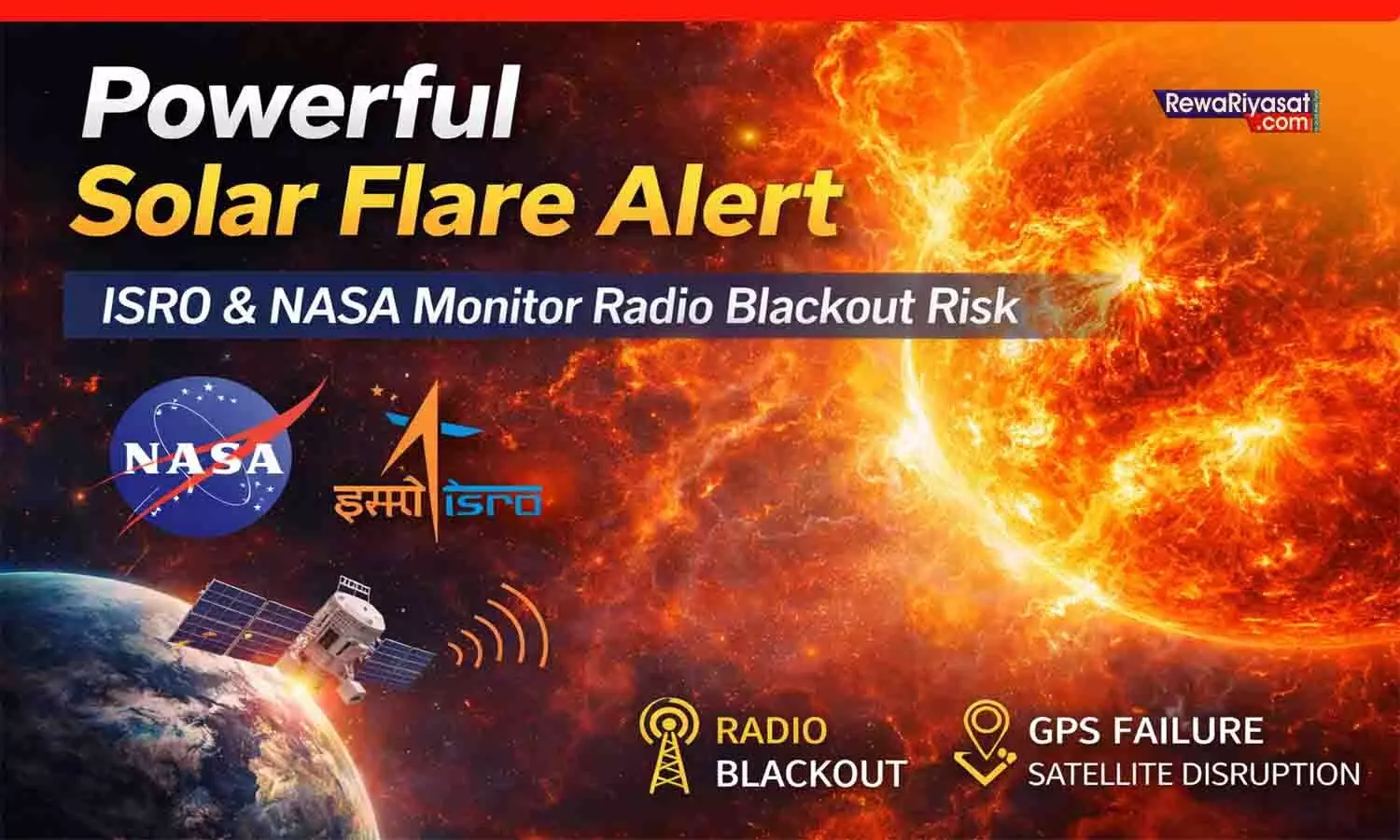


- Strong solar flares detected since February 1, triggering global space weather alerts.
- ISRO and NASA monitoring satellites amid fears of radio and navigation disruptions.
- Brightest solar flare since October 2024, among top 20 strongest since 1996.
- No direct harm to humans, but communication systems may be affected.
A series of powerful solar flares erupting from the Sun since February 1 has placed global space agencies on high alert. According to NASA space weather alerts, the Sun released an exceptionally strong burst of energy that peaked on February 4, making it the brightest solar flare observed since October 2024.
🌞 Solar Flare Alert — What You Need to Know
Powerful solar flares from the Sun have raised concerns about radio blackouts, GPS disruptions, and satellite interference.
- ISRO and NASA actively monitoring the situation
- Potential high-frequency radio communication disruptions
- Strongest solar activity since October 2024
These intense flares have prompted ISRO and other international agencies to closely monitor the situation due to the potential risk of radio blackouts, navigation failures, and satellite interference. While such events pose no direct danger to people on Earth, they can significantly impact modern technology that depends on space-based systems.
NASA and ISRO Monitoring the Situation Closely
NASA confirmed that the strongest flare peaked at 7:13 a.m. Eastern Time on February 4. The event was captured by NASA’s Solar Dynamics Observatory, which continuously tracks solar activity. Scientists noted that this flare ranks among the top 20 most powerful solar flares recorded since 1996.
In India, ISRO is keeping a close watch on more than 50 operational satellites, including those used for communication, navigation, weather forecasting, and national security. Any disruption in these satellites could temporarily affect services such as GPS accuracy, aviation communication, and high-frequency radio transmissions.
Why Solar Flares Matter in the Digital Age
Solar flares are sudden explosions of energy caused by magnetic disturbances on the Sun’s surface. These events release massive amounts of electromagnetic radiation that reach Earth in just minutes. When this radiation interacts with Earth’s ionosphere, it can disrupt radio signals and satellite-based communication systems.
With the world increasingly dependent on satellite technology, internet connectivity, and digital navigation, even short-lived space weather events can have widespread consequences. This is why agencies like ISRO and NASA continuously monitor solar activity and issue timely warnings.
What Happened?
The Sun released one of its strongest solar flares since October 2024, triggering global space weather alerts.
Why It Matters
Solar flares can disrupt radio signals, GPS navigation, aviation communication, and satellites.
Who Is Monitoring?
NASA, ISRO, and global space agencies are closely monitoring satellites and communication systems.
Should You Worry?
There is no danger to people on Earth, but temporary tech disruptions are possible.
How Do Solar Flares Cause Radio Blackouts?
When the Sun releases a powerful solar flare, it emits intense bursts of X-rays and ultraviolet radiation that reach Earth at the speed of light. These rays immediately strike the ionosphere, the electrically charged layer of Earth’s upper atmosphere that enables long-distance radio communication.
As the ionosphere becomes over-ionized, it can absorb or reflect radio signals instead of transmitting them. This leads to sudden high-frequency radio blackouts, particularly affecting aviation, maritime operations, emergency services, and military communications.
Which Services Are Most at Risk?
The immediate impact of strong solar flares is often felt by systems that rely on satellite signals and radio frequencies. Commercial aviation flights, especially those operating over polar routes, may experience communication difficulties. Similarly, ships at sea and remote research stations can face brief but critical signal losses.
GPS navigation systems may also see temporary inaccuracies. For civilians, this could mean location errors on smartphones or vehicle navigation systems, while for defence and disaster response agencies, even minor disruptions can be significant.
🔬 How Do Solar Flares Actually Work?
Solar flares are sudden explosions of energy on the Sun’s surface, caused by intense magnetic field interactions.
- Magnetic stress builds up on the Sun due to its constant rotation
- When magnetic lines snap and reconnect, massive energy is released
- This energy travels to Earth as radiation and charged particles
- It reaches Earth in minutes, disturbing the upper atmosphere
⚠️ The stronger the flare, the greater the impact on satellites, aviation communication, GPS, and power systems.
Why Space Agencies Are on High Alert in 2026
Scientists explain that the Sun follows an approximately 11-year solar cycle, alternating between periods of low and high activity. The year 2026 falls close to the peak of Solar Cycle 25, a phase when sunspots, solar flares, and geomagnetic storms become more frequent and intense.
This is why space agencies like ISRO, NASA, and ESA have increased monitoring and preparedness. While most solar flares pass without noticeable impact on daily life, the growing reliance on digital infrastructure means that the margin for error is smaller than ever before.
What Makes This Flare Unusual?
According to space weather experts, the recent flare stands out because of its intensity and brightness. Being the strongest event since October 2024 and ranking among the top 20 flares since 1996 makes it scientifically significant.
Such powerful flares are relatively rare, and each event provides researchers with valuable data to better predict future solar storms and improve early-warning systems.
Should the Public Be Worried?
Experts emphasize that solar flares do not pose a direct threat to human health on Earth. The planet’s magnetic field and atmosphere effectively shield people from harmful radiation. However, the concern lies in the technological disruptions that can ripple through communication and navigation networks.
This is why timely alerts from space agencies are crucial, allowing satellite operators and service providers to take precautionary measures, such as switching satellites into safe modes or adjusting flight routes when necessary.
How Do Solar Flares Cause Radio Blackouts?
When the Sun releases a powerful solar flare, it emits intense bursts of X-rays and ultraviolet radiation that reach Earth at the speed of light. These rays immediately strike the ionosphere, the electrically charged layer of Earth’s upper atmosphere that enables long-distance radio communication.
As the ionosphere becomes over-ionized, it can absorb or reflect radio signals instead of transmitting them. This leads to sudden high-frequency radio blackouts, particularly affecting aviation, maritime operations, emergency services, and military communications.
Which Services Are Most at Risk?
The immediate impact of strong solar flares is often felt by systems that rely on satellite signals and radio frequencies. Commercial aviation flights, especially those operating over polar routes, may experience communication difficulties. Similarly, ships at sea and remote research stations can face brief but critical signal losses.
GPS navigation systems may also see temporary inaccuracies. For civilians, this could mean location errors on smartphones or vehicle navigation systems, while for defence and disaster response agencies, even minor disruptions can be significant.
Why Space Agencies Are on High Alert in 2026
Scientists explain that the Sun follows an approximately 11-year solar cycle, alternating between periods of low and high activity. The year 2026 falls close to the peak of Solar Cycle 25, a phase when sunspots, solar flares, and geomagnetic storms become more frequent and intense.
This is why space agencies like ISRO, NASA, and ESA have increased monitoring and preparedness. While most solar flares pass without noticeable impact on daily life, the growing reliance on digital infrastructure means that the margin for error is smaller than ever before.
This story is available in multiple languages to ensure accurate information reaches readers across regions and preferences.
For readers who prefer updates in Hindi and want a more India-focused explanation of this development, we have covered the same news in detail in our Hindi edition, explaining its impact in simple language.
Stay in the loop
Join WhatsApp Channel 🚀What Makes This Flare Unusual?
According to space weather experts, the recent flare stands out because of its intensity and brightness. Being the strongest event since October 2024 and ranking among the top 20 flares since 1996 makes it scientifically significant.
Such powerful flares are relatively rare, and each event provides researchers with valuable data to better predict future solar storms and improve early-warning systems.
Should the Public Be Worried?
Experts emphasize that solar flares do not pose a direct threat to human health on Earth. The planet’s magnetic field and atmosphere effectively shield people from harmful radiation. However, the concern lies in the technological disruptions that can ripple through communication and navigation networks.
This is why timely alerts from space agencies are crucial, allowing satellite operators and service providers to take precautionary measures, such as switching satellites into safe modes or adjusting flight routes when necessary.
What exactly is a solar flare?
A solar flare is a sudden explosion of energy on the Sun caused by magnetic disturbances. It releases intense radiation that can affect Earth’s upper atmosphere and space-based systems.
Why are ISRO and NASA monitoring the current solar flares?
The recent flares are among the strongest recorded since 2024. Agencies are monitoring them due to the risk of radio blackouts, satellite disruptions, and navigation errors.
Can solar flares harm humans on Earth?
No. Solar flares do not directly harm people on Earth. The planet’s magnetic field and atmosphere provide strong protection. The main concern is technological disruption.
Which services are most affected by strong solar flares?
Aviation communication, GPS navigation, satellite internet, maritime radio, and defence systems are the most sensitive to solar flare activity.
Why is solar activity increasing in 2026?
The Sun is approaching the peak of Solar Cycle 25, a phase that naturally brings more sunspots, solar flares, and geomagnetic storms.
Should people take any precautions?
For the general public, no special action is needed. However, airlines, satellite operators, and communication providers take precautionary steps based on alerts from space agencies.

Rewa Riyasat News
2013 में स्थापित, RewaRiyasat.Com एक विश्वसनीय न्यूज़ पोर्टल है जो पाठकों को तेज़, सटीक और निष्पक्ष खबरें प्रदान करता है। हमारा उद्देश्य स्थानीय से लेकर राष्ट्रीय व अंतरराष्ट्रीय घटनाओं तक की भरोसेमंद जानकारी पहुंचाना है।