


New York Flights Cancelled as Historic Blizzard Dumps 60 cm Snow Across Northeast
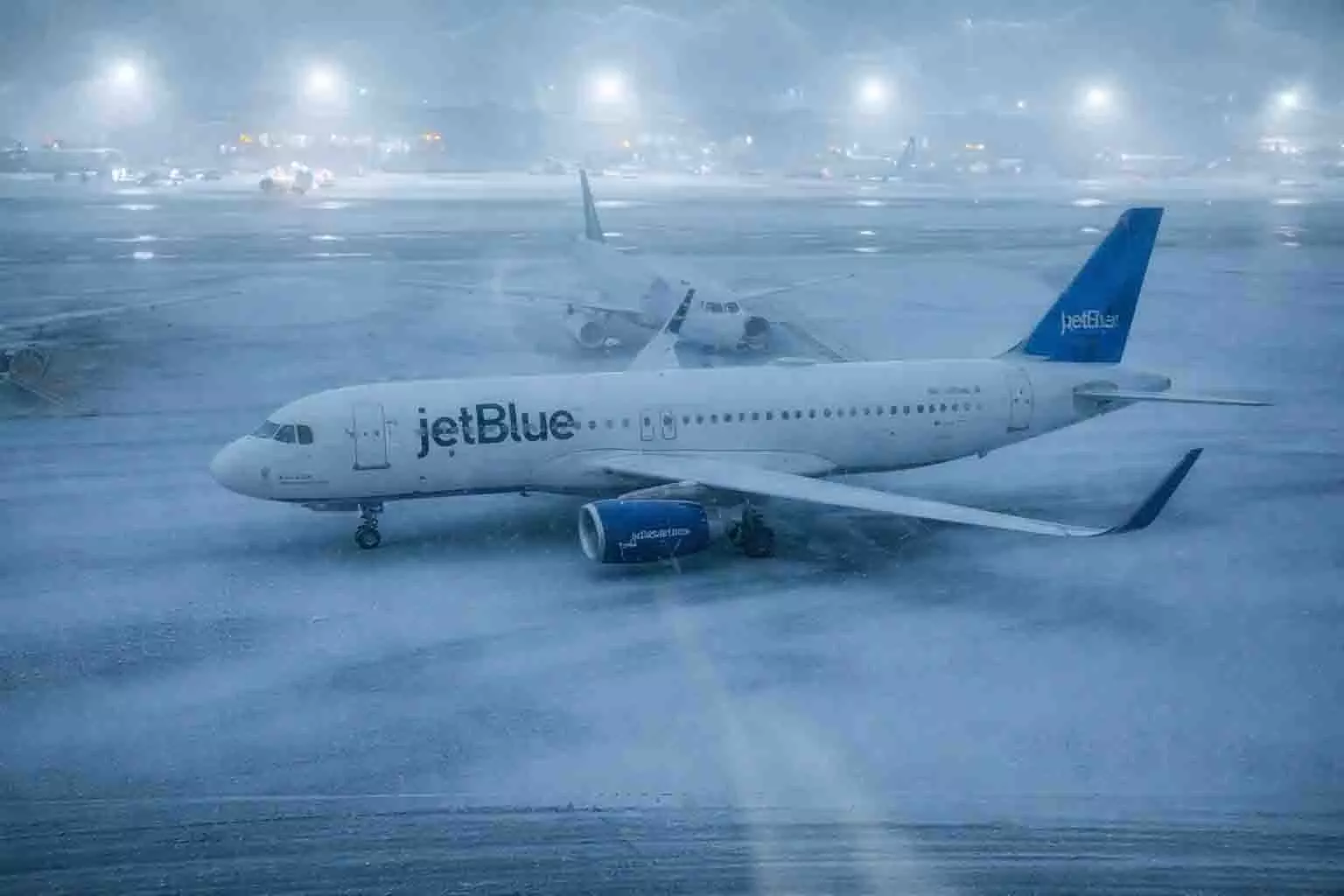
New York Flights Cancelled as Historic Blizzard


Storm Impact Highlights
- More than 1,300 flights cancelled across New York airports in a single day
- Nearly 60 cm of snow recorded across parts of the Northeast region
- State of emergency declared as non-essential travel temporarily restricted
- Airlines issue travel waivers while recovery operations begin
New York flights cancelled surged into the thousands after a historic winter blizzard swept across the US Northeast, dumping nearly 60 centimeters of snow and paralysing one of the world’s busiest aviation corridors. From grounded departures at John F. Kennedy International Airport to near-total shutdowns at LaGuardia, the storm triggered widespread travel disruption, power outages, and emergency responses across multiple states.
Why This Storm Matters
This is being described by forecasters as one of the most powerful winter systems in two decades, combining heavy snowfall, strong coastal winds and whiteout conditions that crippled air and ground transport simultaneously.
Airports at the Centre of the Crisis
The brunt of the cancellations was felt at the New York metropolitan region’s three primary gateways — John F. Kennedy International Airport (JFK), LaGuardia Airport (LGA), and Newark Liberty International Airport (EWR). According to aviation tracking platforms, over 1,300 flights into or out of these airports were scrapped in a single day as runways struggled under intense snowfall and reduced visibility.
LaGuardia reported one of the most dramatic impacts, with departure cancellations approaching near-total levels during peak hours. JFK remained technically operational but experienced significant scheduling breakdowns due to runway clearing constraints and aircraft positioning challenges. Newark Liberty also reported widespread disruption, affecting both domestic and international routes.
Across the United States, total cancellations crossed 5,700 on Monday alone, followed by more than 2,000 additional cancellations the next day as the storm system intensified. While operations began stabilising midweek, aviation authorities warned that lingering snow accumulation and another approaching weather system could prolong delays.
What Triggered the Massive Disruption
Meteorologists characterised the event as a classic “bomb cyclone” or nor’easter — a rapidly intensifying storm system that strengthens as atmospheric pressure drops sharply over a short period. The combination of Arctic air, moisture from the Atlantic Ocean, and strong upper-level wind dynamics created ideal conditions for heavy snowfall and sustained wind gusts exceeding 60 mph in certain coastal stretches.
The result was widespread whiteout conditions, making safe takeoffs and landings nearly impossible at several intervals. Snow removal crews worked continuously, yet fresh accumulation outpaced clearing operations during the peak phase of the storm.
Air traffic management systems are particularly vulnerable during such extreme events because aircraft scheduling relies on tight turnaround windows. Once inbound aircraft are delayed or diverted, a cascading effect impacts subsequent departures nationwide.
State of Emergency and Urban Response
City authorities declared a local state of emergency as snowfall blanketed all five boroughs. Non-essential vehicles were temporarily restricted to ensure that emergency crews could prioritise road clearance. Millions of pounds of salt were deployed across streets, highways, and bridges in an effort to reduce ice formation.
Thousands of temporary workers were hired to clear sidewalks, bus stops and public pathways. Central Park recorded one of its highest snow accumulations in recent decades, underscoring the storm’s intensity.
Emergency responders reported increased calls related to stalled vehicles and weather-related incidents. Officials also urged residents to avoid running vehicles in enclosed or snow-blocked spaces after a fatal carbon monoxide incident was reported in Rhode Island.
Impact Beyond Aviation
The storm’s consequences extended well beyond airport terminals. Hundreds of thousands of residents across Massachusetts, New Jersey, Delaware and Rhode Island experienced power outages as heavy snow and ice weighed down utility lines. In Massachusetts alone, over 170,000 customers were reported without electricity at one stage.
Public transportation services operated on modified schedules. Some commuter rail routes were suspended, while subway and bus systems in New York resumed gradually with delays. Black ice warnings were issued as temperatures remained below freezing even after snowfall subsided.
Airline Travel Waivers and Passenger Advisory
Major US airlines issued winter travel waivers allowing passengers to reschedule flights without penalty. Authorities strongly advised travellers to check airline mobile apps and official airport websites before heading to terminals.
Industry analysts note that extreme weather events are becoming more operationally expensive for airlines, not only due to immediate cancellations but also because of crew displacement, aircraft repositioning costs and passenger compensation obligations.
Economic and Regional Impact
The Northeast corridor represents a critical economic zone linking financial markets, government institutions, and international business hubs. Prolonged travel shutdowns disrupt corporate travel schedules, cargo operations, and tourism flows.
Air freight movements were also affected, delaying shipments of time-sensitive goods. Small businesses dependent on foot traffic reported temporary closures during peak snowfall hours.
Weather-related travel disruptions during winter months are not unusual, but the scale and intensity of this event have placed it among the most severe since the early 2000s.
Climate Context and Frequency of Extreme Storms
Climate researchers have increasingly highlighted how warming ocean temperatures may contribute to stronger coastal storm systems. While individual storms cannot be attributed solely to climate change, broader atmospheric trends indicate heightened volatility in winter weather patterns.
The Northeast region has historically experienced major snowstorms, yet the rapid intensification and heavy precipitation seen in this case reflect the complex interaction between global warming and traditional winter systems.
Recovery and What Lies Ahead
As ploughing operations continue and airport crews clear taxiways, authorities expect gradual normalisation of flight schedules. However, a secondary system moving from the Great Lakes region could bring additional light snowfall and freezing rain, potentially complicating recovery.
Passengers with upcoming bookings are advised to remain flexible and monitor updates closely. Travel insurance providers also reported a spike in policy inquiries following the disruption.
For now, aviation officials are prioritising safety over speed. Restoring full operations across New York’s interconnected air network will require coordination between airlines, air traffic controllers, ground staff and meteorological services.

Travel Disruption Brief
- Historic snowfall close to 60 cm across metropolitan areas
- Over 1,300 cancellations in New York within 24 hours
- Emergency measures triggered to protect public safety
- Gradual recovery underway, further weather risk monitored
Frequently Asked Questions
Why were so many New York flights cancelled?
Heavy snowfall nearing 60 cm combined with strong winds and poor visibility made safe takeoffs and landings impossible at several intervals, forcing widespread cancellations.
Which airports were most affected?
John F. Kennedy International Airport, LaGuardia Airport and Newark Liberty International Airport experienced the highest levels of disruption.
Are flights operating normally now?
Operations have begun stabilising, but delays may continue due to aircraft repositioning and potential additional snowfall later in the week.
What should passengers do if their flight was cancelled?
Passengers should contact their airline directly, check official apps for rebooking options and review available travel waivers.
Could another storm cause more cancellations?
Meteorologists are monitoring a secondary system that may bring light snow and freezing rain, which could result in additional travel delays.

Neelam Dwivedi
Neelam Dwivedi is an experienced digital content editor in the field of journalism. She has been working with the Rewa Riyasat news portal since 2016, managing and editing news content in both Hindi and English. She covers a wide range of topics, including national and international news, politics, sports, technology, health, lifestyle, and social issues. Her work focuses on presenting clear, accurate, and easy-to-understand news for readers while staying updated with the latest trends in digital media.