


India is Not a Broker Like Pakistan: S. Jaishankar's Bold Statement on Middle East War, Slams Opposition Over Pakistan Comparison
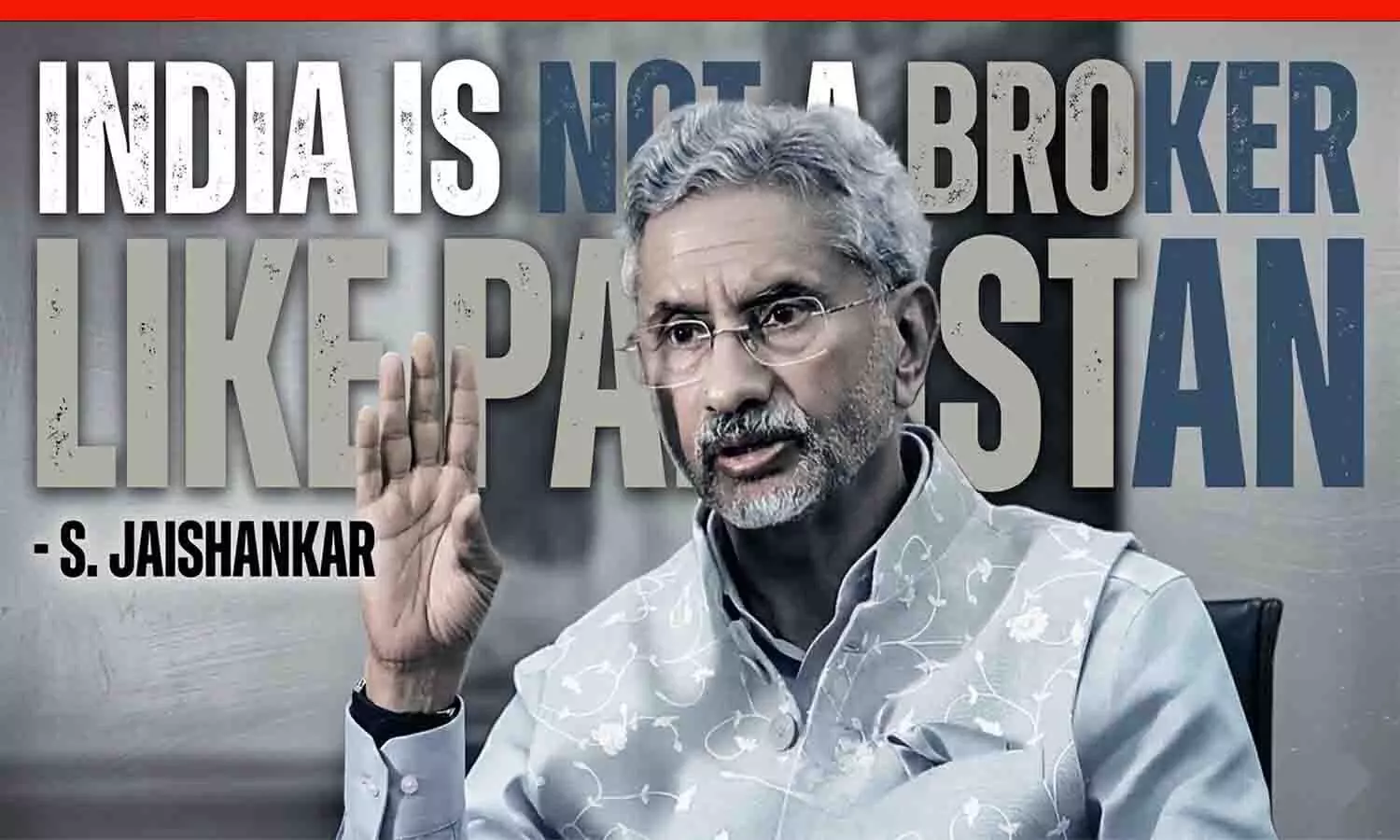
External Affairs Minister S. Jaishankar clarifies India’s stance during a high-level meeting on the Iran-Israel war.


India’s External Affairs Minister, S. Jaishankar, has delivered a powerful and direct message regarding India’s foreign policy and its role in the ongoing Middle East conflict. During a high-level all-party meeting held on Wednesday, Jaishankar made it clear that India does not function as a "broker" or a "middleman", drawing a sharp contrast between New Delhi’s principled diplomacy and the actions of neighboring Pakistan.
A Sharp Response to Opposition Criticism
The discussion turned heated when Congress leader Tariq Anwar suggested that while Pakistan was actively mediating in the Iran conflict, India appeared to be a "silent spectator." Responding to this comparison, S. Jaishankar reportedly stated that India is not a broker country like Pakistan and does not engage in mediation for others just for the sake of it. According to sources from the meeting, the Minister emphasized that India’s diplomatic strength lies in its independence and its ability to communicate directly with global leaders without acting as an agent for any specific side.
The meeting, chaired by Defense Minister Rajnath Singh, lasted for over two hours. It was attended by several top cabinet members, including Home Minister Amit Shah and Finance Minister Nirmala Sitharaman. The primary goal was to brief political parties on the volatile situation in West Asia and how it might affect India’s energy security and the safety of its citizens abroad.
PM Modi’s High-Stakes Diplomacy with Donald Trump
During the briefing, the government shared crucial details about Prime Minister Narendra Modi’s recent communication with U.S. President Donald Trump. The government informed the leaders that PM Modi has explicitly told President Trump that the ongoing war must end as soon as possible. The Prime Minister’s logic is simple: a prolonged war in the Middle East is a "lose-lose" situation for the entire world, impacting global trade, fuel prices, and regional stability.
While the government insisted that it is being highly proactive, the opposition expressed dissatisfaction. They argued that India’s voice should be louder on the global stage given its rising stature. However, the government maintained that its "quiet diplomacy" is actually producing results, ensuring that India’s interests remain protected while others are caught in the crossfire.
Energy Security: Is India’s Oil Supply Safe?
One of the biggest concerns for the common man in India during any Middle East war is the price of petrol and diesel. Foreign Secretary Vikram Misri gave a detailed presentation showing that despite the tensions between Iran, Israel, and the United States, India is in a safe position. Petroleum Minister Hardeep Singh Puri also reassured the room that the supply of crude oil and LPG (cooking gas) remains normal.
India’s massive refining capacity has acted as a shield. Even with the conflict escalating, four major shipments of oil have already arrived safely at Indian ports, and more are on the way. A very positive sign mentioned in the meeting was that Iran has reopened its supply routes after a five-day closure, which has eased fears of a global energy "choke point."
The "Team India" Approach for the Great Test
The all-party meeting follows a serious warning issued by PM Modi in the Rajya Sabha just a day earlier. The Prime Minister had described the current global situation as the "biggest test" for the country in recent times. He warned that if the war between the U.S.-Israel alliance and Iran continues, the consequences will be felt globally. He called for a "Team India" spirit, urging state governments and political parties to work together to navigate these difficult economic and diplomatic waters.
The government also highlighted that Indian embassies in the Middle East are on high alert. Plans are already in place to evacuate Indian citizens if the situation worsens, though currently, the focus remains on keeping the supply lines open and maintaining diplomatic pressure for peace.
A Firm Stance on Global Sovereignty
In conclusion, the message from the Indian government is clear: India will not be pressured into playing roles that do not suit its national interest. By refusing to be a "broker," India is signaling that it prefers to be a "stabilizer"—a country that talks to all sides but acts only in the interest of global peace and its own citizens. While the opposition continues to demand more transparency and a formal discussion in Parliament, the government is moving forward with a strategy of "active neutrality."
The coming weeks will be crucial as the world watches how the relationship between Washington, Tehran, and New Delhi evolves. For now, the Indian government insists that the situation is under control, and the country is well-prepared for any challenges the conflict may bring.

Aaryan Puneet Dwivedi
Aaryan Puneet Dwivedi is a senior editor and an experienced journalist who has been active in the news industry since 2013. He has extensive experience covering and editing news across multiple fields, including politics, national and international affairs, sports, technology, business, and social issues. He is a state-level accredited journalist recognized by the Madhya Pradesh government. Known for his in-depth understanding of news and current affairs, he focuses on delivering accurate, reliable, and reader-friendly information across all major news categories.