


Iran Rejects Trump’s ‘Deceptive’ Peace Plan: Demands War Damages and Sovereignty
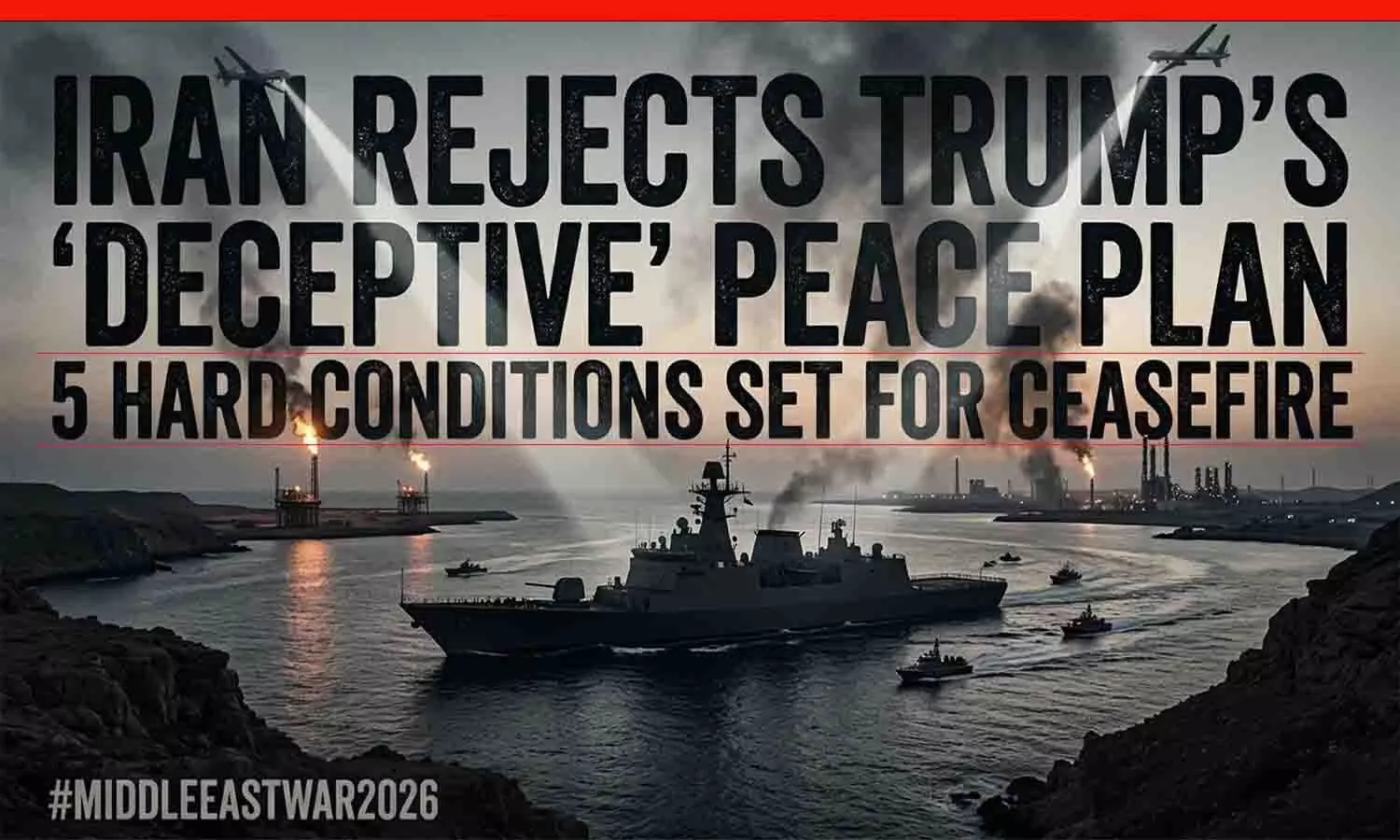
Tehran has rejected President Trump's peace proposal, describing it as a 'deception' and issuing 5 counter-demands.


The tension in the Middle East has reached a new boiling point as Iran officially rejected a massive 15-point ceasefire proposal sent by U.S. President Donald Trump. Calling the American plan a "deception" and "disconnected from reality," Tehran has made it clear that it will not back down unless its own specific conditions are met. This development comes at a time when global energy markets are on edge and the risk of a wider regional war remains high.
Tehran Calls Trump’s Plan a "Political Trap"
Iranian officials have slammed the 15-point plan, which was reportedly delivered to Tehran through Pakistani intermediaries. According to state-run media, the Iranian government believes the proposal is designed to put psychological pressure on them rather than offer a fair solution. A senior security official stated that Iran would only end the war on its own timeline and terms, not when Washington dictates.
The rejection is a significant blow to the Trump administration's efforts to project a "deal-maker" image on the global stage. While the White House has claimed that talks are "productive," Iran’s public stance is one of defiance, suggesting a massive gap between what both sides consider a "fair deal."
Iran’s 5 Non-Negotiable Conditions for Peace
Instead of accepting the U.S. terms, Iran has laid out its own five-point counter-proposal. Tehran insists that the war will continue until these demands are satisfied:
- Halt to Assassinations: A total stop to all military strikes and targeted killings of Iranian officials and scientists.
- Security Guarantees: A legally binding international guarantee that war will not be imposed on Iran again in the future.
- War Reparations: Financial compensation for the physical and economic damage caused during the conflict.
- Regional Ceasefire: The war must end not just for Iran, but on all fronts involving its regional allies (proxies).
- Strait of Hormuz Sovereignty: International recognition of Iran’s total authority over the Strait of Hormuz, the world's most important oil transit point.
The 15-Point US Plan: What was Trump Asking For?
The American proposal, facilitated by Pakistan's Army Chief, was a comprehensive attempt to dismantle Iran’s strategic capabilities. The plan included strict demands such as the complete shutdown of nuclear facilities like Natanz and Fordow, handing over enriched uranium to international watchdogs, and stopping all support for groups like Hezbollah.
In exchange, the U.S. offered to lift economic sanctions and provide help with civilian nuclear energy. However, for Iran, the "price" of this peace—giving up its missile range and regional influence—is currently seen as an "unconditional surrender" rather than a negotiation.
The Pakistan Connection: A Secret Middleman
Interestingly, the reports confirm that Pakistan is playing a central role in this high-stakes diplomacy. While India has stated it is "not a broker" like Pakistan, Islamabad has been actively carrying messages between Trump’s top aides (including Jared Kushner) and the Iranian leadership. The U.S. is reportedly utilizing Pakistan's unique position as a neighbor to Iran that also maintains a military relationship with the West.
White House Remains Optimistic Amid Chaos
Despite the public rejection from Tehran, White House Press Secretary Karoline Leavitt told reporters that "talks are ongoing." The U.S. maintains that Iran is looking for an "exit strategy" because of the heavy military pressure. President Trump has reportedly paused planned strikes on Iranian power plants to give these diplomatic efforts a chance, but he has warned that "hell will be unleashed" if a deal isn't reached soon.
As of now, the world remains in a state of "wait and watch." With Iran insisting on its sovereignty over the Strait of Hormuz and the U.S. demanding a total nuclear shutdown, the road to peace looks incredibly difficult. For the global audience, this means that oil prices and regional stability will remain uncertain as both sides play a dangerous game of "diplomatic chicken."

Aaryan Puneet Dwivedi
Aaryan Puneet Dwivedi is a senior editor and an experienced journalist who has been active in the news industry since 2013. He has extensive experience covering and editing news across multiple fields, including politics, national and international affairs, sports, technology, business, and social issues. He is a state-level accredited journalist recognized by the Madhya Pradesh government. Known for his in-depth understanding of news and current affairs, he focuses on delivering accurate, reliable, and reader-friendly information across all major news categories.