


India-EU Free Trade Agreement: Luxury Cars to Get Cheaper, Wine Taxes to Drop – A Historic Global Trade Shift
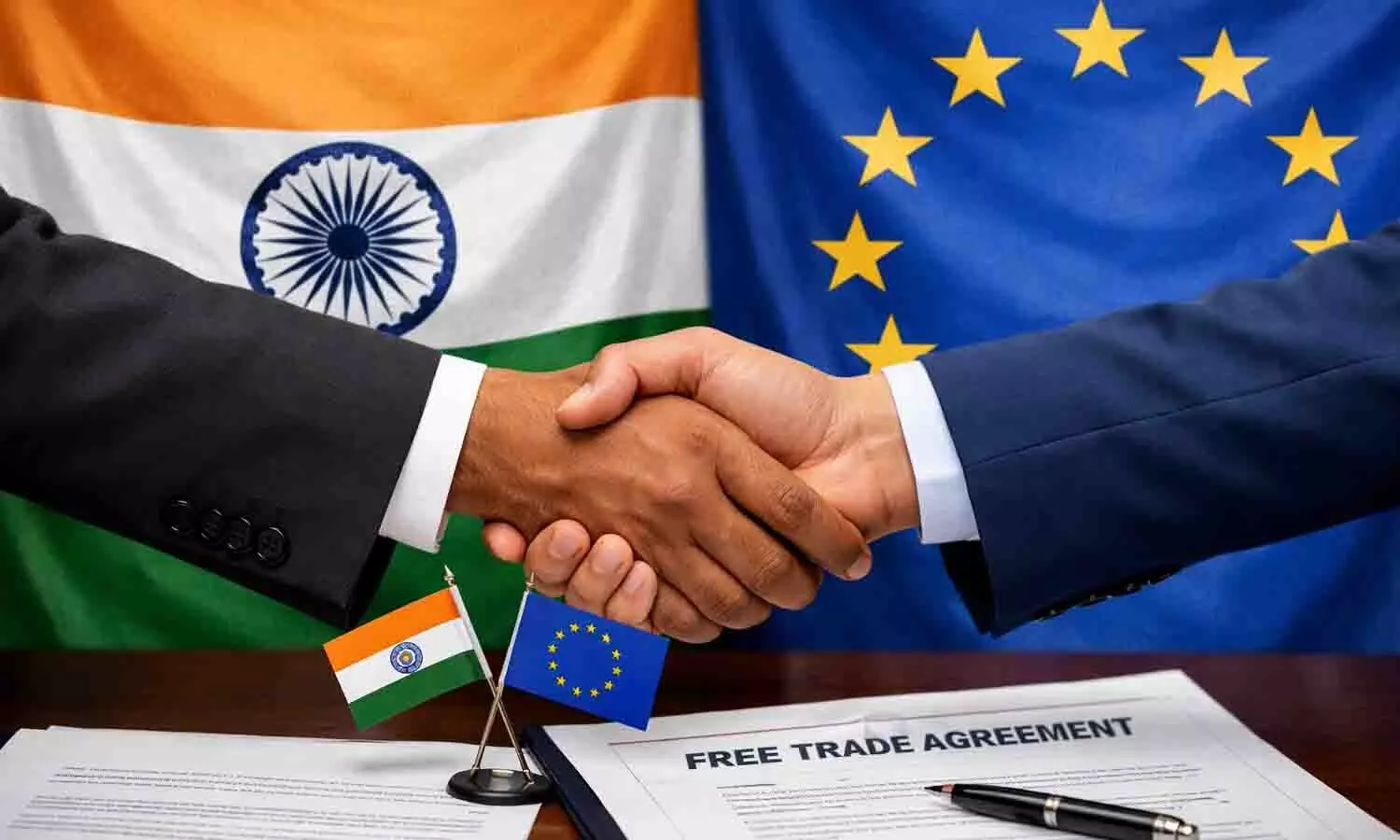


- India and the EU sign a Free Trade Agreement after 18 years, announced at the 16th India-EU Summit
- Luxury cars like BMW and Mercedes may become cheaper in India as tax drops from 110% to 10%
- European wine and liquor could see tax reduced from 150% to 20–30%
- Piyush Goyal says – This is India’s eighth FTA under PM Modi’s leadership
The India-European Union Trade Deal sent ripples across the global business world on Tuesday. After nearly 18 years of prolonged negotiations, India and the European Union (EU) have finally agreed on a historic Free Trade Agreement (FTA). The landmark announcement was made during the 16th India-EU Summit, attended by Prime Minister Narendra Modi and European Commission President Ursula von der Leyen.
Globally, this agreement is being hailed as the “Mother of All Deals”. The reason is simple—India is the fourth-largest economy in the world, while the European Union is the second-largest. Together, they account for nearly 25% of global GDP and almost one-third of world trade. This makes the deal not just important for India and Europe, but a turning point for global trade dynamics.
What Is the India-EU Free Trade Agreement and Why Is It Historic?
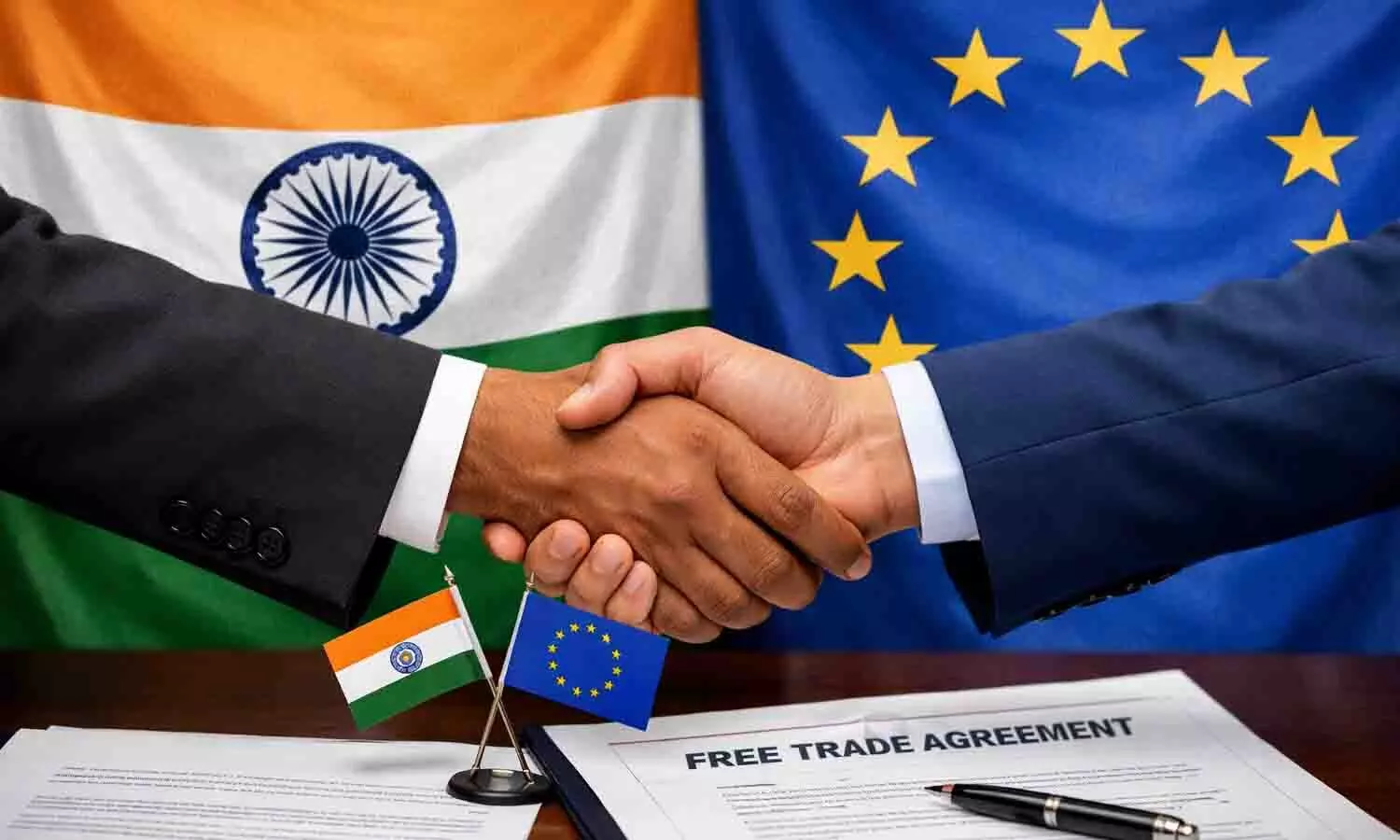
The India-EU Free Trade Agreement aims to make trade between the two regions simpler, faster, and more affordable. Heavy import-export tariffs will be reduced in phases. This is why European luxury cars like BMW, Mercedes, and Audi could soon become far more accessible in India.
Until now, these vehicles attracted an import duty of up to 110%, pushing them far beyond the reach of most buyers. After the deal is implemented, this tax could fall to just 10%. The direct impact will be felt across India’s auto market, triggering intense competition in the premium car segment.
How Will Tax Cuts on Luxury Cars and Wine Change the Market?
Another major benefit of this agreement involves European wine and premium liquor. At present, alcohol imported from Europe faces a steep 150% tariff in India. Once the FTA comes into force, this could be reduced to 20–30%. This means imported wines and spirits will become far more affordable for Indian consumers.
Experts believe this will significantly benefit the hospitality, tourism, and retail sectors. Hotels, bars, and restaurants will be able to procure premium products at lower costs, offering better prices to customers. However, it also presents a challenge for Indian liquor manufacturers, who will now face direct competition from global brands.
Piyush Goyal’s Statement: India’s Eighth Major FTA Under PM Modi
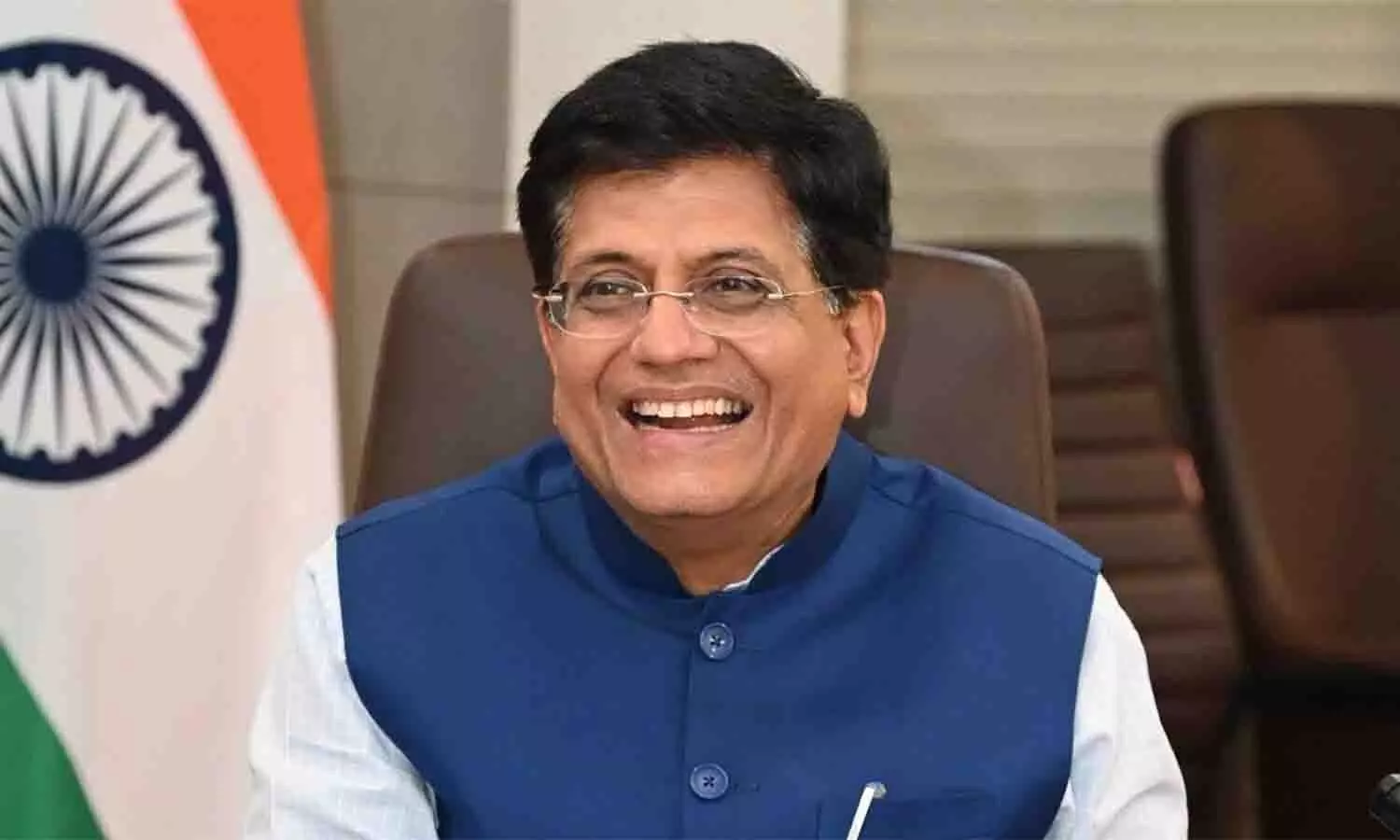
Piyush Goyal called the India-EU FTA a “moment of celebration” for 1.4 billion Indians. He emphasized that the deal goes far beyond commerce and represents a deep strategic bond between India and Europe. According to him, this is India’s eighth Free Trade Agreement under Prime Minister Narendra Modi.
He also revealed that India has signed trade agreements with 37 developed nations over the last four years, aiming to transform the country into a global manufacturing and export hub. The EU deal is the most significant pillar of this long-term vision.
What Will Be the Impact on India’s Economy?
The India-EU Trade Deal will not be limited to cars and liquor. It will open new growth avenues in manufacturing, technology, pharmaceuticals, textiles, IT, and green energy. The EU is a vast and stable market, where Indian products earlier faced heavy tariff and non-tariff barriers.
Once implemented, Indian companies will gain easier access with lower taxes to European markets. This will boost exports, bring in foreign exchange, and create millions of jobs. Economists estimate that this deal could add an extra 0.5% to 1% to India’s GDP growth over the next decade.
When Will This Deal Take Effect?
The biggest question now is when the India-EU Free Trade Agreement will become operational. According to reports, the agreement is likely to be implemented by 2027. Before that, both sides will complete legal approvals and begin phased tariff reductions.
India will also safeguard its sensitive sectors such as agriculture, dairy, and small industries. The government’s objective is to ensure that farmers and MSMEs are protected while still benefiting from global integration.
FAQs – Key Questions on the India-EU Trade Deal
How will ordinary consumers benefit from the India-EU FTA?
Luxury cars, wine, and several European products will become more affordable. Increased competition will also push Indian companies to improve quality and pricing.
Will Indian industries suffer due to this deal?
The government has promised protection for sensitive sectors. In the long run, this deal will make Indian industries globally competitive.
How much cheaper can BMW and Mercedes become?
Currently, these cars face nearly 110% import duty. After implementation, this could drop to 10%, leading to a major price reduction.
When will the agreement be implemented?
Government sources indicate that the deal may become operational by 2027, after legal and administrative procedures are completed.
Will this create new jobs?
Yes. Increased exports, foreign investment, and new industries could generate millions of new jobs, especially for young professionals.

Rewa Riyasat News
2013 में स्थापित, RewaRiyasat.Com एक विश्वसनीय न्यूज़ पोर्टल है जो पाठकों को तेज़, सटीक और निष्पक्ष खबरें प्रदान करता है। हमारा उद्देश्य स्थानीय से लेकर राष्ट्रीय व अंतरराष्ट्रीय घटनाओं तक की भरोसेमंद जानकारी पहुंचाना है।