


2026 Winter Olympics Women’s Free Skate Final: Gold on the Line in Milan Showdown
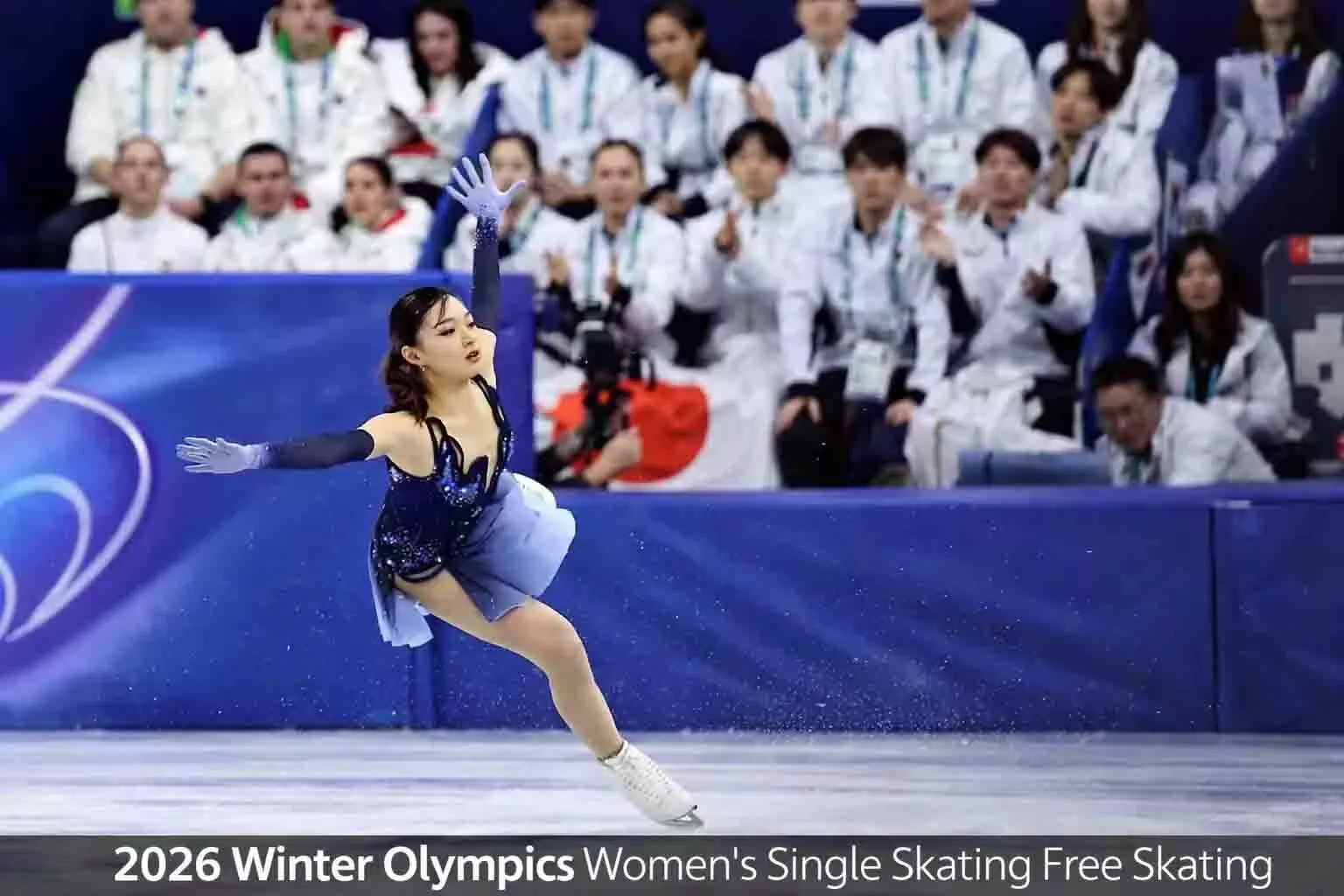


Key Highlights
- Only 2.12 points separate the top three skaters heading into the free skate.
- Ami Nakai’s triple Axel gives her a technical edge.
- Kaori Sakamoto’s program component scores keep her firmly in contention.
- Alysa Liu aims to end a 20-year U.S. Olympic medal drought in women’s singles.
The women’s singles free skating final at the 2026 Winter Olympics in Milan has evolved into one of the closest Olympic figure skating showdowns in decades. After a tightly contested short program, the top three athletes are separated by just over two points, leaving the gold medal wide open. Technical difficulty, execution precision, judging components, and Olympic pressure will converge in a single performance that could redefine the competitive balance of women’s figure skating.
Why This Final Is Historic
The narrow scoring gap, presence of a triple Axel contender, and strategic second-half jump layouts make this free skate one of the most unpredictable Olympic finals in recent memory.
A Three-Way Olympic Battle
Ami Nakai of Japan leads the standings after delivering a technically confident short program. Close behind is two-time world champion Kaori Sakamoto, known for her speed and performance maturity. In third position stands Alysa Liu, the reigning world champion representing the United States. The margin separating them is small enough that a single under-rotation call, step-out, or fall could completely reorder the podium.
Olympic free skates historically produce dramatic reshuffles. Fatigue, crowd intensity, and final-group skating order all influence momentum. The last athlete to skate often faces amplified pressure but also benefits from clear knowledge of target scores.
The Triple Axel Factor
Nakai’s technical arsenal includes the triple Axel, one of the highest-value jumps in women’s skating. Successfully landed, it provides a substantial base value advantage and signals competitive confidence. However, it remains one of the most difficult jumps to execute cleanly under Olympic scrutiny.
If she includes the triple Axel again in the free skate and executes it without error, her technical element score could create separation. But Olympic history shows that high-risk elements can quickly turn from advantage to vulnerability.
Kaori Sakamoto’s Program Component Strength
Sakamoto does not rely on ultra-difficult jump content but consistently earns elite Program Component Scores. Judges reward skating skills, transitions, interpretation, choreography, and overall performance quality. Her speed across the ice and seamless linking steps generate positive Grades of Execution even on standard jump layouts.
In tightly scored Olympic finals, strong PCS can outweigh minor technical gaps. If Sakamoto delivers a clean skate with emotional authority, she may surpass higher-risk competitors.
Alysa Liu and the American Medal Narrative
Alysa Liu enters the free skate carrying national expectations. The United States has not secured an Olympic medal in women’s singles for two decades. Liu’s competitive style blends solid jump difficulty with balanced execution, reducing reliance on ultra-high-risk elements.
Her pathway to gold likely depends on delivering a near-flawless program while capitalizing on any mistakes from rivals. Clean landings, strong spin levels, and controlled step sequences will be essential.
Japan’s Depth and Global Dominance
Japan’s presence near the top of the leaderboard reflects years of structural investment in figure skating development. Multiple elite athletes from the same federation signal technical consistency and depth. Heading into Milan Cortina 2026, Japan appears positioned as the sport’s dominant nation.
This dominance shifts the historical balance traditionally shared among North America, Europe, and Asia, underscoring the sport’s globalization.

Olympic Final Insight
- 2.12-point margin ensures podium volatility.
- Triple Axel risk versus PCS stability defines strategy.
- Second-half jump bonus may alter final totals significantly.
- Youth leadership marks transition under new age eligibility rules.
Second-Half Jump Bonus Strategy
Jumps performed in the second half of the free skate receive a 1.1x base value bonus. This scoring incentive encourages skaters to structure programs with risk-loaded endings. While strategically rewarding, fatigue in the closing minutes raises the chance of errors.
Athletes and coaches must weigh mathematical advantage against endurance management. The final minute of skating could determine Olympic destiny.
Minimum Age Rule and Athlete Welfare
The Olympic age minimum now stands at 17, reflecting reforms aimed at protecting athlete welfare while maintaining elite performance standards. Despite the higher age threshold, teenage competitors continue to push technical boundaries.
This generational shift suggests a sport balancing sustainability with innovation. Advanced jump content is now expected, yet consistency and longevity are increasingly valued.
Execution Over Difficulty
Under-rotations, edge calls, and negative Grades of Execution can erase theoretical advantages. Olympic scoring rewards precision as much as ambition. Even the most difficult program must be delivered cleanly to translate into medal-winning totals.
Potential Podium Disruptions
Beyond the leading trio, other contenders remain mathematically within range. A clean, high-difficulty program from a trailing athlete could disrupt medal projections. Olympic finals frequently produce unexpected breakthroughs.
Join WhatsApp Channel Follow on Google NewsFuture Outlook for Women’s Figure Skating
The outcome in Milan may signal broader trends in competitive strategy. If technical risk prevails, more skaters may pursue triple Axels and complex combinations. If component strength and execution triumph, balanced programming may regain emphasis.
Either result will influence coaching decisions worldwide as federations prepare for the next Olympic cycle. The 2026 final stands not just as a medal event but as a directional moment for the sport.
How close is the women’s free skate competition at the 2026 Winter Olympics?
Only 2.12 points separate the top three athletes after the short program, making it one of the closest Olympic finals in recent history.
Why is the triple Axel so important in this final?
The triple Axel carries high base value and can create a technical advantage, but it also involves significant execution risk.
What role do Program Component Scores play?
PCS reward skating skills, interpretation, choreography, and overall presentation, often offsetting technical difficulty differences.
Can the second-half bonus change medal results?
Yes. Jumps performed in the second half receive a 1.1x bonus, potentially adding crucial points in a tight contest.
Is this final significant for the United States?
Yes. Alysa Liu has an opportunity to end a two-decade Olympic medal drought for U.S. women’s singles skating.

Aaryan Puneet Dwivedi
Aaryan Puneet Dwivedi is a senior editor and an experienced journalist who has been active in the news industry since 2013. He has extensive experience covering and editing news across multiple fields, including politics, national and international affairs, sports, technology, business, and social issues. He is a state-level accredited journalist recognized by the Madhya Pradesh government. Known for his in-depth understanding of news and current affairs, he focuses on delivering accurate, reliable, and reader-friendly information across all major news categories.