


Strategic Shift: India Reroutes 70% of Oil Imports Amid Hormuz Crisis, Fuel Prices to Remain Stable


इस खबर को हिंदी में पढ़ें
मिडिल ईस्ट युद्ध के बीच बड़ी राहत: भारत ने बदला तेल सप्लाई का रूट, पेट्रोल-डीजल की कीमतें नहीं बढ़ेंगी!
पूरी हिंदी रिपोर्ट यहाँ देखें →Key Highlights
- India successfully diverted 10% of total oil imports to non-Hormuz routes.
- Government formally confirms that domestic petrol and diesel prices will not increase.
- Dependence on the conflict-ridden Strait of Hormuz reduced, securing 70% of supply via alternative paths.
- Energy stocks, including LNG and LPG, are now in a surplus position despite regional tensions.
New Delhi: In a decisive move to shield the domestic economy from the escalating Middle East conflict, the Government of India has successfully restructured its oil procurement strategy. Despite a staggering 27% surge in international crude prices over the last eight days due to the blockade of the Strait of Hormuz, the center has officially assured citizens that petrol and diesel prices will remain unchanged. This stability is attributed to a rapid tactical shift where India has rerouted a significant portion of its imports through safer maritime corridors, effectively insulating the nation from the supply shocks at the world’s most critical chokepoint.
The Hormuz Alternative
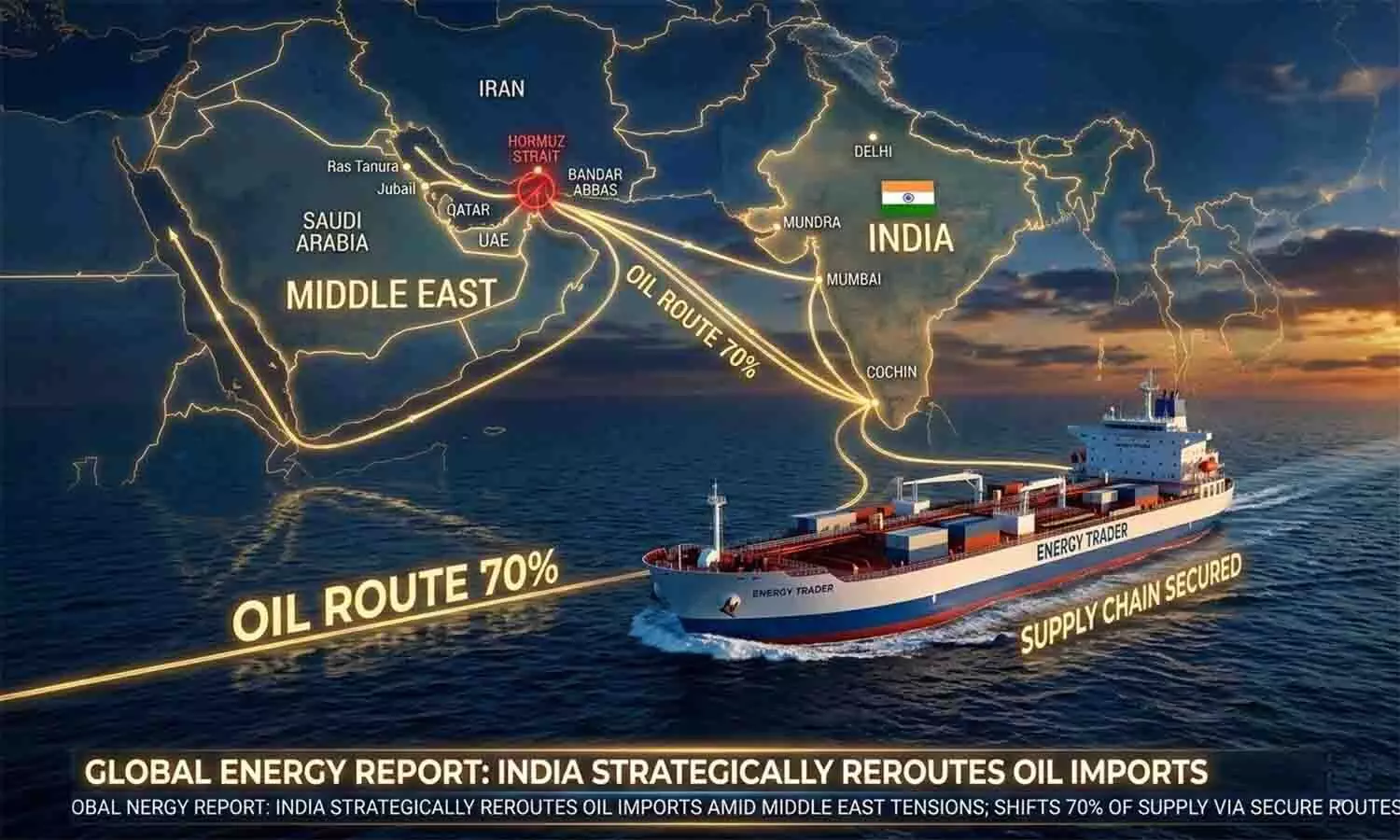
With 20% of global oil passing through Hormuz, India previously relied on it for 50% of its crude. By activating long-range supply lines, India has shifted 70% of its volume to secure routes.
Securing the Energy Frontier: The 70% Rerouting Strategy
The Strait of Hormuz, often called the "world's oil artery," has become a theater of geopolitical friction, leading to its temporary closure for many commercial vessels. Recognizing the risk early, Indian authorities have increased oil imports via alternative routes by 10%. Previously, approximately 60% of India's crude arrived through non-Hormuz channels; this has now been scaled up to 70%. This strategic diversification ensures that the volatility in the Persian Gulf does not translate into long queues at Indian fuel stations.
According to high-level sources, the move was necessitated by the need to maintain a steady flow of energy for India's growing industrial and transport sectors. The shift involves sourcing more from the Atlantic basin, African nations, and utilizing the Cape of Good Hope route where necessary. While logistics costs for these longer routes are slightly higher, the volume-based contracts and strategic reserves have allowed the government to absorb the price impact without passing it on to the consumer.
Global Price Volatility vs. Domestic Price Ceiling
The international energy market has been in a state of frenzy, with Brent crude benchmarks fluctuating wildly. The 27% spike in just over a week would typically trigger a revision in daily fuel pricing. However, the Indian government has taken a firm stand. "There will be no increase in the prices of petrol and diesel. We reassure the nation today that prices will remain stable," a government spokesperson confirmed.
This "price ceiling" approach is backed by India's improved energy stock position. Internal reviews suggest that the national strategic petroleum reserves (SPR) and oil marketing companies' (OMCs) inventories are at a healthy level. The confidence of the administration reflects a significant improvement in energy management compared to previous decades, where global conflicts almost always led to immediate domestic inflation.

- 🔹 Import Diversification: 70% of crude now arrives via conflict-free maritime zones.
- 🔹 Zero Consumer Impact: Domestic fuel rates decoupled from the 27% global price hike.
- 🔹 Diplomatic Gains: Iran ensures safe passage for neutral commercial cargo.
- 🔹 Inventory Strength: LNG and LPG reserves updated to 'Surplus' status.
The Iranian Assurance and International Cooperation
On the diplomatic front, India’s engagement with West Asian powers has yielded positive signals. Iran has reportedly indicated that it intends to resume cargo movement through the Hormuz Strait shortly. Crucially, Tehran has messaged its neighbors and major trading partners like India that it will not target neutral commercial vessels, provided their respective territories are not used as launchpads for military strikes against Iran.
Furthermore, India is exploring surplus offers from other global producers. Markets in North America and Southeast Asia have shown interest in filling the supply gap. With a surplus of LNG currently in the domestic system, the government feels empowered to negotiate better terms, ensuring that the 'energy security' of 1.4 billion people remains uncompromised.
Addressing Domestic Concerns and Political Allegations
The government also took the opportunity to address domestic political narratives. Opposition leaders had recently raised concerns regarding a potential hike in LPG (cooking gas) prices. Government sources have categorically dismissed these claims as a "misinterpretation of official statements."
While acknowledging that there were initial logistical concerns regarding LPG stocks when the Hormuz crisis first broke out, the situation has since been rectified. The commitment to price stability was specific to petrol and diesel, but the government emphasized that LPG supply is currently robust and there is no imminent threat of a price surge or shortage. The focus remains on maintaining the supply chain for essential commodities to prevent any cascading effect on inflation.
Future Outlook: A More Resilient India
As the conflict in the Middle East evolves, India’s "Route Diversification" policy serves as a blueprint for other major energy consumers. The ability to pivot 10% of total national import volume to new routes in such a short window demonstrates high logistical agility. Experts believe that even if the Strait of Hormuz remains volatile for an extended period, India’s refined strategy and strategic reserves will keep the economy on track.
The long-term goal for India remains a mix of increasing domestic production, transitioning to green energy, and maintaining a highly flexible global supply network. For now, the Indian motorist can breathe a sigh of relief as the government stands as a buffer between global instability and domestic retail prices.
Join WhatsApp Channel Follow on Google NewsFrequently Asked Questions (FAQs)
1. Why are petrol and diesel prices not increasing in India?
The Indian government has strategically rerouted oil imports and utilized its reserves to absorb the 27% global price hike, ensuring domestic price stability for consumers.
2. What is the new oil supply route for India?
India has shifted its focus to maritime routes that bypass the Strait of Hormuz, increasing imports from alternative global suppliers to cover 70% of its total requirements.
3. How has the Strait of Hormuz blockage affected India?
While the blockade initially threatened 50% of India's oil supply, the government successfully diverted 10% of the total volume to other routes within days to maintain steady supply.
4. Is there a shortage of LPG or cooking gas in India?
No. Despite early concerns, the government has confirmed that LPG stocks are in a surplus position and there is no shortage or planned price hike.
5. Will the global oil price hike impact the Indian economy?
By decoupling domestic retail prices from global volatility through strategic sourcing and reserves, the government aims to prevent inflation and protect the economy from external shocks.

Aaryan Puneet Dwivedi
Aaryan Puneet Dwivedi is a senior editor and an experienced journalist who has been active in the news industry since 2013. He has extensive experience covering and editing news across multiple fields, including politics, national and international affairs, sports, technology, business, and social issues. He is a state-level accredited journalist recognized by the Madhya Pradesh government. Known for his in-depth understanding of news and current affairs, he focuses on delivering accurate, reliable, and reader-friendly information across all major news categories.